Leach field installation cost depends on soil, site layout, tank size, access, system type, permits, and local rules. A simple Houston site with good soil may need less work than land with poor drainage or tight access. The final cost is confirmed in a detailed quote after the property is checked.
Table of Contents
- What drives leach field installation cost?
- How does tank size affect leach field installation cost?
- How does property access change the installation price?
- How does septic system type affect installation cost?
- How does location affect leach field installation cost?
- What should a leach field installation quote include?
- When should you request a leach field installation quote?
- Frequently Asked Questions
What drives leach field installation cost?
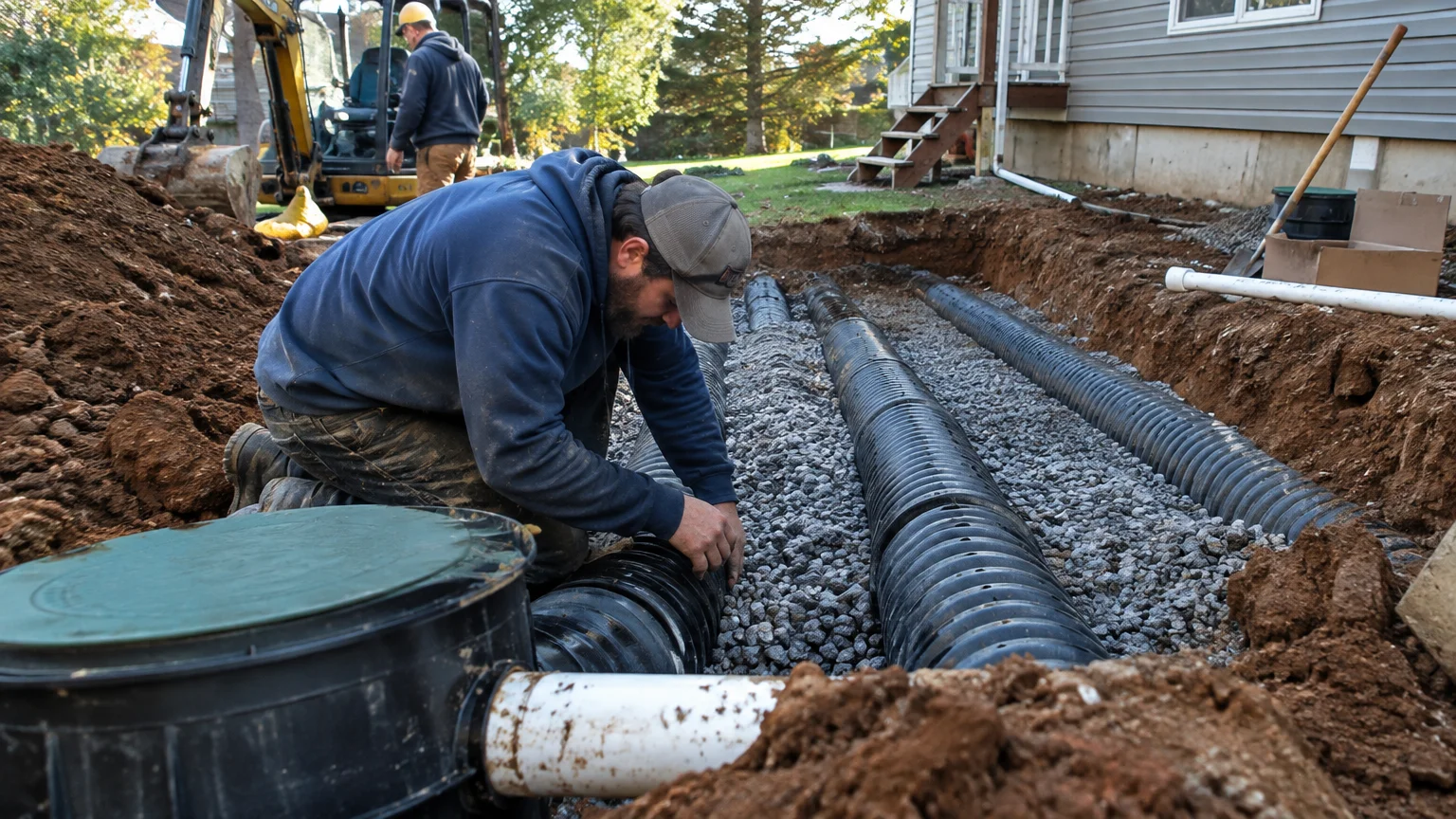
Leach field installation cost is shaped by the land, system design, and site work. A leach field, also called a drainfield, is the part of a septic system that spreads treated wastewater into the soil. The soil must take in that water at a safe rate.
How soil, site conditions, and property layout affect pricing
Soil is one of the first things a septic professional checks. Sandy soil may drain well, while clay can hold water. Rock, a high water table, steep slopes, and nearby wells can make the design harder. The home’s location, property lines, driveways, wells, and surface water also affect field placement.
A soil check helps show if the site can support a standard field. Local rules may require a site survey, soil test, or approved design. The size and shape of the open land can limit the available choices. A small lot may need a special system instead of a simple layout.
Why permitting, design, and preparation matter
Permits help confirm that the planned system meets health and environmental rules. Design work may review wastewater needs, soil, setbacks, reserve areas, and slope. Site preparation may include clearing brush, removing old parts, improving drainage, or protecting nearby features.
The simplest installation is usually easier when soil, access, and open ground are suitable. Difficult conditions do not always stop installation. They can change the plan, however. Septic Pumping Houston can help Houston property owners understand which site details may affect the work before the final quote is prepared.
How does tank size affect leach field installation cost?
Tank size affects the drainfield because the whole septic system must handle the property’s expected wastewater flow. The right design depends on household size, bedroom count, building use, local rules, and plumbing fixtures.
Matching drain field capacity to household wastewater demand
A septic tank holds wastewater while solids settle and lighter material floats. Liquid then moves toward the drainfield. The field must accept this flow without staying too wet. A system that is too small may become overloaded. A larger design may need more land and materials.
A home with several bedrooms may need a larger approved system than a small home. A rental, guest house, office, or busy business may have different needs from a single-family home. Designers look at expected use, not only the current number of residents.
When an undersized or failing system needs a larger design
An existing system may need more than a repair when the field is too small, damaged, or placed in poor soil. Past additions, new fixtures, or a change in building use can also affect capacity. A failing field may need replacement space, a new layout, or another treatment method.
Property owners should not add bedrooms or connect new buildings before checking the septic plan. The current tank and drainfield may not support the added flow. A professional can review records, inspect the site, and explain whether installation, repair, or another option fits the property.
How does property access change the installation price?
Property access affects the work because installation often needs digging equipment, pipe delivery, soil movement, and safe work space. Clear access can make the project simpler. Narrow gates, steep driveways, fences, trees, and nearby buildings can limit equipment movement.
Equipment access, excavation, and material delivery challenges
A crew may need to move machinery from the road to the work area. If that route is blocked, smaller equipment or extra preparation may be needed. Long material paths can make delivery and handling harder. Buried utilities must be found before digging begins.
The tank and field locations both matter. A long distance between the house, tank, and field can change pipe placement and grading. During a site visit, the owner should point out wells, irrigation lines, underground power, old tanks, and private utility lines.
Landscaping, grading, and restoration considerations
Installation can disturb grass, gardens, trees, driveways, and other surface features. Grading may be needed so water moves in the right direction. The finished area may need soil replacement, seeding, erosion control, or other restoration.
Restoration should be discussed before work starts. Some surfaces recover with soil and seed. Patios, walls, mature trees, and paved areas may need separate planning. A clear quote should explain which restoration tasks are included and which tasks belong to the property owner.
Owners can safely clear small movable items and mark private features before the crew arrives. They should not dig near the tank or field without utility checks. Excavation, pipe work, and work near wastewater should be handled by trained professionals.
How does septic system type affect installation cost?
The septic system type affects the design, equipment, permits, and installation work. A conventional system may suit land with good soil and enough space. Other sites may need pumps, special treatment, raised soil, or added controls.
Conventional gravity-fed drain fields
A conventional gravity-fed system sends liquid from the tank toward the drainfield without a pump for normal movement. It may work when soil, slope, and layout meet local rules. Its design is often more direct than systems that need dosing or extra treatment.
This option is not right for every property. Poor soil, a high water table, limited space, or an unsuitable slope may require another design. A professional must confirm the system choice through site testing and local approval.
Pressure-dosed, mound, and alternative septic systems
A pressure-dosed system uses a pump and controls to spread liquid across the field in planned doses. A mound system raises the treatment area above natural ground. This can help with shallow soil or a high water table. Alternative systems may use added treatment when a standard field is not suitable.
These systems can involve more equipment, inspections, controls, and maintenance. They may also need electrical work or a service plan. The owner should ask how the system works, which parts need care, and what happens during a power outage.
System type should follow the site assessment, not a guess based on a nearby property. Two nearby lots can have different soil, slope, water levels, or approved designs. The final quote should name the proposed system and explain why it fits the property.
How does location affect leach field installation cost?
Location affects the project through local labor, material delivery, permit rules, soil conditions, and inspections. A rural property may have different site limits from a home in a developed neighborhood. Local rules can also control setbacks, reserve areas, tank placement, and approved treatment methods.
Regional labor, permitting, and material differences
Crews, engineers, soil professionals, and inspectors may have different roles in different areas. Material delivery may also be easier in some places. Weather, ground conditions, and seasonal access can affect the work plan.
The property’s location can affect how far equipment and materials must travel. It may also affect whether an old system can be repaired or must be replaced. These details are why general online information cannot confirm the cost for one property.
Site-specific rules in Texas and the main Houston area — from Houston Heights and Spring Branch West to nearby neighborhoods and communities
Rules in Texas may differ between counties, cities, and health departments. The approved process may include a site review, permit application, design review, inspection, and final approval. The main Houston area, from Houston Heights and Spring Branch West to nearby neighborhoods and communities, includes properties with different soil types and local needs. Each site needs its own review.
Property owners should ask who handles permits and who schedules required inspections. They should also ask whether permit work is included in the quote or listed separately. Septic Pumping Houston serves property owners and can explain which local details should be reviewed before installation planning moves ahead.
What should a leach field installation quote include?
A useful quote should explain the planned work in plain language. It should identify the system, major materials, site preparation, permit tasks, installation work, testing, and restoration. The final cost is confirmed only after the property and project details have been reviewed.
Design, permits, excavation, materials, and installation work
The quote should describe the field layout, pipe work, tank connection, distribution method, pumps, controls, and other major parts. It should also state whether design drawings, soil testing, permit support, inspections, excavation, backfilling, and cleanup are included.
Property owners should check whether the quote covers removal of an old system. They should also ask about electrical work, access preparation, temporary fencing, traffic control, and protection of nearby features. Clear wording helps prevent confusion when site conditions change.
Items to clarify about testing, restoration, and follow-up
Testing may include soil evaluation, system checks, pressure checks, or inspections required by local authorities. The quote should explain who performs each test and what happens if the site does not pass the first review. It should also describe how the disturbed area will be left.
Follow-up details matter too. Owners should ask about operating instructions, pump controls, alarm signals, maintenance needs, and documents needed for a future sale or repair. A written quote should list assumptions and exclusions instead of leaving them unclear.
A strong quote makes comparison easier without claiming that one design fits every property. Property owners should compare the work scope, system type, permit duties, restoration plan, and follow-up support. They should not compare only the final figure.
When should you request a leach field installation quote?
A property owner should request a quote when the drainfield shows warning signs, the home is being expanded, or a property purchase depends on septic approval. Early planning allows time for testing, design, permits, and changes to the site plan.
Warning signs that a drain field may be failing
A failing field may show slow drains, sewage odors, wet ground, unusually green grass, standing wastewater, or sewage backing up indoors. These signs can have other causes, but they should not be ignored. Keep people and pets away from wastewater.
Common warning signs include:
- Wet or spongy soil over the drainfield
- Strong sewage smells near the field or tank
- Slow drains across several fixtures
- Sewage returning through toilets or floor drains
- Unusual plant growth in the field area
Septic pumping alone may not fix a damaged field. Property owners should avoid driving over the field, adding soil without advice, or using harsh drain products. A professional can check whether the issue involves the tank, pipes, soil, pump, or field.
How Septic Pumping Houston can help Houston property owners plan next steps
Septic Pumping Houston can help Houston property owners review symptoms, site limits, and project goals. The next step may be an inspection, records review, soil testing, repair plan, or replacement design. Owners buying a property should request septic records and confirm that the system matches current home use.
Key takeaways
- Leach field installation cost depends on soil, access, system type, tank size, and local rules.
- A drainfield must match expected wastewater flow and approved site conditions.
- Difficult access, poor soil, slopes, and high water can change the design.
- A clear quote should explain design, permits, materials, excavation, testing, and restoration.
- Early review helps owners plan before a failing field causes a larger problem.
Conclusion
Leach field installation is not the same for every property. Soil, space, access, wastewater demand, system type, and local approval all shape the work. A careful site review gives the owner a clearer plan and helps the final quote match real conditions.
Owners should act quickly when they notice wet ground, odors, slow drains, or sewage backups. Contact us to discuss the property and plan the next step with Septic Pumping Houston.
Frequently Asked Questions
How deep should a septic tank be?
A septic tank should be placed at a depth that supports proper pipe flow and safe access. The exact depth depends on the tank design, soil, frost conditions, site grade, and local rules. Lids should remain reachable for inspection and pumping. A professional should confirm the final placement before digging.
How far does a septic tank need to be from a house?
The required distance depends on local health rules, tank design, property layout, wells, water features, and other setbacks. The tank also needs safe access for inspection and septic pumping. Property owners should not rely on one general distance because Texas and local authorities may set different requirements.
How does a septic system work?
Wastewater flows from the building into a septic tank. Solids settle, floating material stays near the top, and liquid leaves through an outlet. The drainfield then spreads the liquid into suitable soil for more treatment. Regular maintenance and careful water use help the system work properly.
How can a property owner find the septic tank lid?
Records, inspection reports, property plans, and visible pipe routes may help locate the tank. Some lids are buried, while others sit near the surface. Owners should avoid guessing with digging equipment. A trained professional can help locate the tank safely and mark access points.
Who installs septic tanks near me?
A licensed septic installer or approved septic contractor usually handles tank and drainfield work. The right provider should understand local permits, soil testing, system design, excavation, and inspections. Property owners can ask Septic Pumping Houston about the next step for a site-specific review.
If you are unsure what you are dealing with, have the system checked before the problem grows. Get in touch with Septic Pumping Houston to discuss the property and the next step.
If you are not sure what you are dealing with, it is worth having someone look at it before it turns into a bigger job. Get in touch with Septic Pumping Houston today and we will tell you where you stand.