The answer to how long does it take to install a septic system depends on the land, soil, design, permits, and weather. The digging may take only a few days on a ready site. Planning, inspections, and ground repair often take longer. Houston property owners should expect several steps before final approval.
Table of Contents
- How long does it take to install a septic system?
- What needs to happen before septic system installation?
- What happens during septic system installation?
- How do the septic tank and drainfield work together?
- What can delay a septic system installation?
- What should property owners expect after installation?
- What are common misconceptions about septic installation timelines?
- Frequently Asked Questions
How long does it take to install a septic system?
A septic system can take several weeks or more from planning to approval. The physical work may take a few days when the site is ready. Soil tests, design work, permits, contractor schedules, inspections, and rain can add more time.
A septic system is a private wastewater system. It treats household water when a property does not use a public sewer. Most systems have a septic tank, pipes, a drainfield, and soil that helps treat liquid waste. The exact design depends on the property and Texas rules.
The usual process follows these steps:
- The owner arranges a site review and soil test.
- A designer chooses a system for the land and home.
- The plans go to the right local authority for approval.
- A contractor schedules work after approval.
- The crew installs the tank, pipes, and drainfield.
- An inspector checks the open work.
- The crew covers the system and repairs the work area.
Some lots have simple soil and easy access. Others need a raised, pressure, or alternative system. A large rural lot may also need longer pipe runs and more site work. Septic Pumping Houston helps Houston property owners understand which parts of the process need careful planning.
Typical timeline from planning to final approval
Planning often takes longer than digging. Complete records and quick choices can help keep the job moving. Missing details may send plans back for changes.
The owner should ask what steps are still open. A permit, inspection, or soil report may affect the final date. The physical work cannot always begin as soon as a contractor is chosen.
Why installation schedules vary by property
Every lot has different needs. Soil depth, slopes, groundwater, rock, trees, driveways, and property lines all affect the design. A buyer or investor should ask for the approved plan and inspection records before setting a move-in date.
Houston lots may also have limited access or nearby structures. These details can change where equipment goes and how the drainfield is built. A clear site plan helps avoid surprises.
What needs to happen before septic system installation?
Before work starts, the property needs a site review, soil test, system design, permits, and work schedule. These steps show where the system can go and what type of system the land can support. Skipping a step may lead to delays, failed inspections, or later system trouble.
A site review looks at the full lot. The reviewer may check slopes, wells, streams, buildings, driveways, property lines, and room for a replacement drainfield. The goal is to place the system safely and follow local rules.
Soil testing checks how well the ground can receive and treat wastewater. Slow soil, shallow rock, or a high water table may require a different design. A drainfield is the part that receives liquid from the tank and spreads it through the soil.
Site evaluation, soil testing, and system design
The designer uses the site results to choose the tank size, pipe layout, and drainfield area. The plan may also include pumps. The design must match the home, expected water use, and local rules.
A larger home or business may need a different plan than a small house. Owners should share future plans early. A bedroom, pool, addition, driveway, or detached building can affect the system layout.
Changing the property after approval may require a new design. That change can add time before the crew begins. Ask the designer about planned work before the final plan is sent in.
Permits, approvals, and contractor scheduling
Most septic projects need approval before earthwork begins. The exact office and process depend on the county and state. Owners should check local rules instead of relying only on a neighbor's experience.
A contractor can usually schedule the work after the permit is ready, the plan is accepted, and the site is reachable. Keep the soil report, approved plan, permit, inspection notes, and tank details together.
These records help future owners and service workers. They can also help with septic tank replacement or repairs later. Good records make it easier to understand what is below the ground.
What happens during septic system installation?
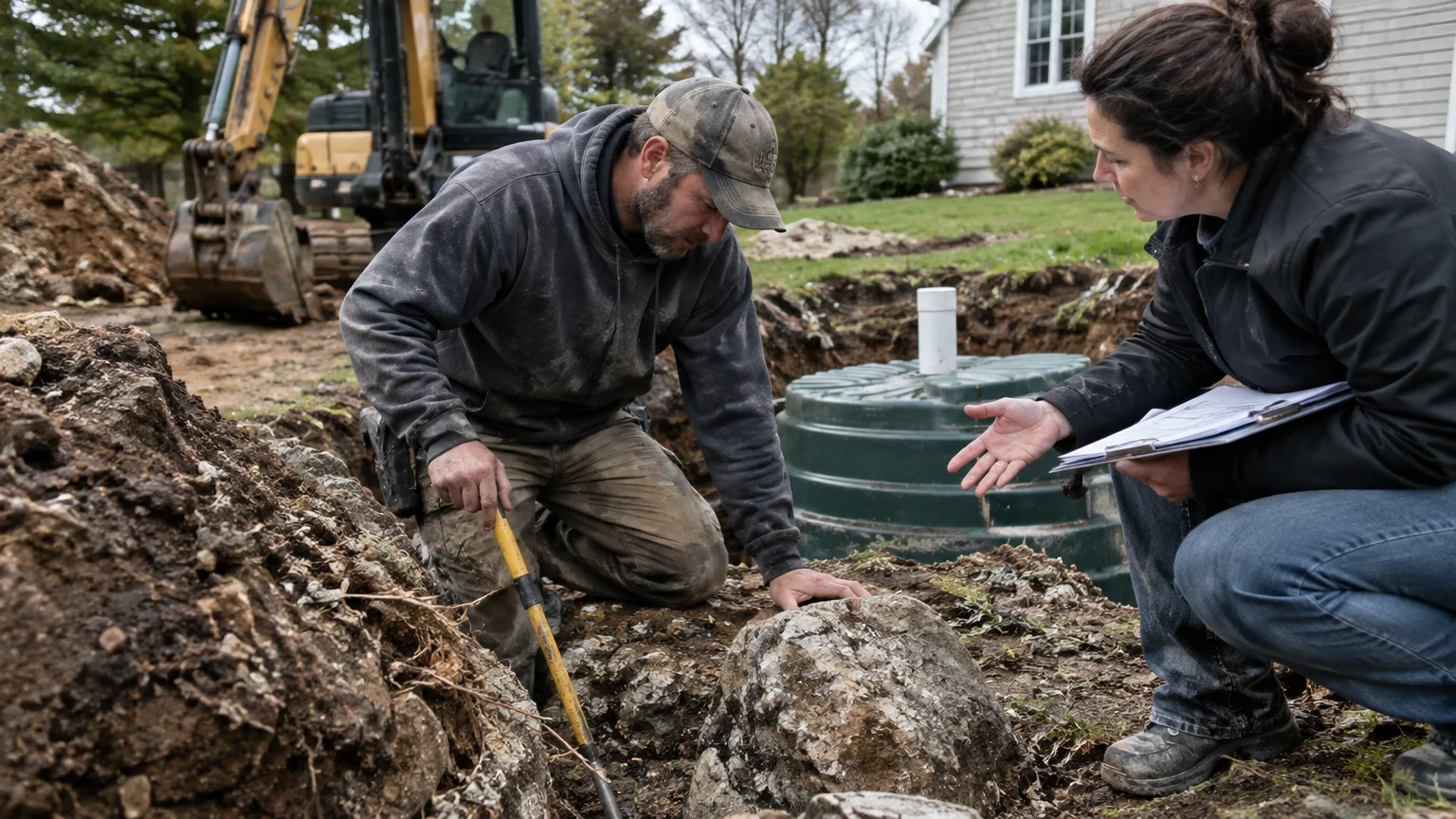
During installation, the crew marks the approved layout, digs the work areas, places the tank, installs pipes, and builds the drainfield. The work must follow the approved plan. Major parts should not be moved just because another spot looks easier.
The crew often starts by marking buried utilities and the system layout. Excavators then prepare the tank area and drainfield. The tank must sit on stable ground at the approved depth.
Pipes need the right slope or pressure controls. This allows wastewater to move as planned. The tank connects to the building sewer pipe. Inside the tank, heavy solids settle and light material floats.
Liquid leaves through an outlet and travels toward the drainfield. Some systems use a pump to move liquid to a higher area. The design decides how this flow works.
Excavation, tank placement, and drainfield construction
The crew must protect the tank, pipes, and drainfield from heavy equipment. The drainfield should not be used for parking or storage. Deep-rooted plants should also stay away from this area.
After the inspector checks the open work, the crew can cover the system. The ground may look rough at first. Soil can settle after backfilling, especially after heavy rain.
Owners should follow the contractor's advice about grass, traffic, and surface water. Driving over the drainfield can harm pipes and compact the soil. Keeping the area clear helps the new system work well.
How the septic system components connect
Wastewater moves from the home through an inlet pipe to the septic tank. Liquid then leaves through an outlet pipe or pump. It may pass through a distribution box before entering the drainfield and soil.
A distribution box divides flow among different trenches. Access lids allow the tank to be inspected and serviced. Pumps and controls help move water in systems that need them.
Knowing these connections helps owners, tenants, buyers, and service workers. It also helps people find the tank and drainfield during future work. Do not dig without checking for utilities and system parts first.
How do the septic tank and drainfield work together?
The septic tank and drainfield have different jobs. They must still work as one system. The tank slows wastewater so solids can settle and floating material can stay inside.
The drainfield spreads the liquid part through the soil. The soil gives the liquid more treatment. A problem in either part can affect the whole system.
When water leaves sinks, toilets, showers, or laundry, it flows into the tank. Heavy solids form sludge at the bottom. Grease and other light material form scum near the top.
The middle liquid layer moves toward the outlet as new water enters. Baffles or outlet devices help keep sludge and scum inside. An effluent filter may also help keep solids out of the drainfield.
How wastewater moves through the system
The drainfield receives liquid in measured amounts. A distribution box may divide the flow among several trenches. Some systems use a pump and controls to send water to the field.
The approved design decides how much liquid each area receives. Normal water use helps the system handle daily flow. Leaking toilets, long showers, and many laundry loads can add too much water.
Spreading laundry across the week can reduce stress on the drainfield. Fixing leaks also helps. Families should learn where the drainfield is and keep it clear.
How soil treats and filters wastewater
Soil provides a final treatment layer. Small spaces in the soil let liquid move while holding back many harmful particles. Soil organisms help break down some waste as it travels downward.
The drainfield needs air, space, and stable soil. Compacted ground, standing water, roots, and heavy vehicles can reduce performance. Roof water should be directed away from the field.
Owners can handle simple upkeep themselves. They can fix small water leaks, keep records, protect the drainfield, and use water wisely. Soil testing, excavation, tank placement, electrical work, and system design need qualified professionals.
What can delay a septic system installation?
Weather, soil, access, permits, materials, and design changes can delay installation. Rain may make the ground too soft for equipment. Storms, frozen ground, or high groundwater may also pause work.
Rock, hard clay, shallow soil, and steep slopes can slow digging. A narrow driveway or fence may limit equipment access. Before work begins, clear the approved route and tell the contractor about gates, pets, wells, buried lines, and future building plans.
Weather, soil conditions, and site access
A crew may need to wait until the ground can support heavy equipment. Working in wet soil can harm the drainfield. It can also create a poor base for the tank.
Safe delays are better than rushing the work. A rushed installation may fail sooner. Ask the contractor what site condition must improve before work can continue.
The crew may also find conditions that were not clear during the first review. Unexpected rock or groundwater may require a design change. Ask what changed and whether new approval is needed.
Permit changes, material availability, and design revisions
A local authority may ask for more information or corrections. A change in the home plan can affect tank size or drainfield area. Material delivery and equipment schedules may also affect the start date.
Property owners can reduce confusion by keeping one current plan. Do not hire separate crews to change the layout without written approval. Septic Pumping Houston can explain what Houston homeowners should keep for future septic tank pumping and repair visits.
What should property owners expect after installation?
After installation, the system usually needs an inspection before final approval. The owner should receive records that show the layout, tank location, maintenance needs, and approval status. The ground may need time to settle and grow grass.
The inspector checks whether the work matches the approved plan. This may include the tank, pipe connections, access openings, drainfield, and other required parts. The local authority decides the exact inspection steps.
Inspections, final approval, and restoring the property
Owners should not cover open work unless the inspector allows it. Photos can help record buried parts, but they do not replace required approval. After inspection, the crew can backfill and grade the area.
Keep vehicles and heavy loads away from the drainfield. Surface water should flow away from the system. Grass is often a good cover, but the approved plan and contractor instructions come first.
Initial use, maintenance records, and septic tank pumping
A new system still needs careful use. Fix leaks, avoid flushing wipes and grease, and use water wisely. Only toilets, wastewater, and normal household waste should enter the system.
Septic tank pumping removes built-up sludge and scum. The right schedule depends on tank size, household use, solids levels, and local guidance. A service provider can inspect the tank and keep service records.
Owners should ask where the tank lids and drainfield are located. This helps during routine care or an urgent problem. It also helps future owners understand the system.
What are common misconceptions about septic installation timelines?
A common mistake is thinking installation starts when the excavator arrives. The process may begin with property research, soil testing, design work, and permits. Another mistake is assuming every property can use the same tank and drainfield layout.
Some owners think the tank is the whole system. It is only one part. Pipes, distribution equipment, the drainfield, soil, access points, and a care plan all matter.
Why the digging is not the only part of the process
Earthwork may look like the main task. The system must still be approved, inspected, tested, and covered correctly. The crew also needs time to protect the drainfield and restore the land.
Visible work does not show every step. Much of the planning happens before equipment arrives. Clear questions and complete records help owners understand progress.
When to contact a septic professional for a project timeline
Contact a professional when a property needs a new system, an old system is failing, or a building plan changes. Missing records are another reason to ask for help. A buyer should request the approved design and recent inspection information before closing.
A homeowner does not need a professional for every task. Owners can find access lids, protect the drainfield, fix simple leaks, and keep basic records. Excavation, tank placement, electrical work, soil testing, and system design should be handled by qualified professionals.
Key takeaways
- Planning, permits, and soil conditions often control the full timeline.
- Physical installation may be shorter than the approval process.
- The tank, pipes, drainfield, and soil must work together.
- Weather, access, rock, groundwater, and design changes may cause delays.
- Keep the approved plan and service records for future care.
Conclusion
The best answer to how long does it take to install a septic system comes from the property plan. A clear site review, approved design, ready work area, and timely inspection can help the project move smoothly. Septic Pumping Houston serves property owners and helps them understand installation and ongoing septic care.
Contact us to discuss septic system planning, installation questions, or future maintenance needs.
Frequently Asked Questions
How deep should a septic tank be?
A septic tank should be installed at the depth shown in the approved design. The depth depends on the sewer pipe, tank shape, soil, frost concerns, access needs, and local rules. The lids must stay reachable for inspection and pumping.
Owners should not bury or move the lids without professional guidance. The tank also needs safe access for future service. Keep the tank location in your property records.
How far does a septic tank need to be from a house?
The required distance depends on state and local rules, wells, property lines, water features, site conditions, and the approved design. A septic professional or local health authority can confirm the setback for a specific property.
The tank also needs safe access for inspection and septic tank pumping. The approved plan should show the tank location and required clear space. Do not guess the setback from another property.
How does a septic system work?
Wastewater flows from the home into a septic tank. Solids settle, light material floats, and the middle liquid layer moves to the drainfield. The drainfield spreads that liquid through soil for more treatment.
Proper water use helps the system handle normal household flow. Regular care also helps protect the tank and field. If the system shows signs of trouble, ask a qualified professional to inspect it.
How can someone find a septic tank lid?
The approved septic plan is the best place to start. If records are missing, an owner can follow the sewer line from the house, look for ground markers, or ask a professional to locate the tank.
Dig carefully because buried utility lines and tank parts may be nearby. A professional can use safe methods when the tank location is unclear. Once found, keep the access point marked and reachable.
Who installs septic tanks near me?
A licensed or qualified septic installer familiar with local rules should handle tank installation. The owner should check required credentials, permits, insurance, inspection steps, and experience with the planned system.
Septic Pumping Houston can help property owners understand the next step for a septic project. Houston owners should also ask which local approvals apply to their property.
If you are not sure what you are dealing with, it is worth having someone look at it before it turns into a bigger job. Get in touch with Septic Pumping Houston today and we will tell you where you stand.