Last spring, a Houston family broke ground for a new patio—until a buried tank lid turned up right where the grill would sit. Plans shifted on the spot. A quick look at the septic layout beforehand would have saved time and hassle. If you’re asking how far can a septic tank be from the house, this guide walks through common distances, Houston-specific considerations, and practical planning so you can move forward confidently and avoid expensive surprises.
Here’s the plain answer most homeowners need: the septic tank is usually set a short distance from the structure to keep the pipe run reliable and allow straightforward service access, while the drainfield lies farther away in dry, oxygen‑rich soil. Exact numbers depend on your local code and what your property allows. A smart layout protects water quality, your yard, and your home. When you’re deciding how far can a septic tank be from the house, remember that code, soil, slope, groundwater, climate, and access all combine to determine the final location.
Table of Contents
Before you dive in, here’s how to use this guide: we start with plain‑language setbacks, then cover factors that change distances, explain tank vs. drainfield, outline planning steps, and show how to check distances on your own property. You’ll also see common mistakes, real‑world scenarios, FAQs, key takeaways, and next steps with Septic Pumping Houston and the main Houston area — from Houston Heights and Spring Branch West to nearby neighborhoods and communities.
- The Short Answer: Typical Setbacks for Homes
- What Changes the Required Distance
- Tank vs. Drainfield: Different Parts, Different Setbacks
- Layout Planning: Access, Elevation, and Pipe Runs
- How to Check Distances on Your Own Property
- Common Mistakes and How to Avoid Them
- Real-World Scenarios, Timelines, and Costs
- Frequently Asked Questions
- Key Takeaways
- Conclusion
The Short Answer: Typical Setbacks for Homes
A “setback” is the minimum permitted distance between septic components and features like buildings, wells, and water. These rules keep wastewater away from your home and drinking water and allow routine service. For most houses, the tank is close enough for a short, steady‑slope pipe yet far enough for safe soils and clear access. The drainfield (also called a leach field) sits farther out where the soil is clean and unsaturated. Expect larger separations from wells, streams, lakes, and property lines to protect water quality and neighboring land uses. Your local code sets the final numbers for Houston and Texas.
Why do these minimums matter? If components are too close, wastewater or odors could reach your home or a well. If they’re too far, long, shallow pipes can clog and, in colder regions, even freeze. Good placement balances protection, flow, and access and reserves space for a “reserve” drainfield in case the first field ages out. Homes commonly have shorter building setbacks for the tank and wider setbacks for the drainfield from wells, water bodies, and property lines because those distances safeguard health and water quality. The U.S. Environmental Protection Agency explains how onsite systems function and why siting rules matter (EPA homeowner resources), which is a reminder to treat setbacks as firm boundaries.
If you’re planning work in your yard, treat setbacks like lines you cannot cross. That approach keeps patios, sheds, and driveways from blocking lids and pipes later. When you’re unsure, ask the permitting office or schedule a Septic Inspection with Septic Pumping Houston. Clear answers today prevent bigger issues tomorrow. If you’re still wondering how far can a septic tank be from the house on your property, confirm the local setback table and any special rules for wells, shorelines, or flood zones in Houston.
What Changes the Required Distance
Every lot is unique. Codes set the minimums, while site limits set the upper bounds, so your design must fit between those to protect public health and allow maintenance. Counties and states publish setback tables for both the tank and drainfield relative to structures, wells, utilities, and natural features. Many jurisdictions also require permits, soil evaluations, and inspections before use. Your health department or building office maintains records and can explain what applies in Texas and Houston.
Site conditions shape the final distance:
- Soil: Sandy soils drain quickly; clayey soils drain slowly. Many codes adjust setbacks and system types based on soil testing.
- Slope: Steeper lots can push the drainfield downslope or require a pump chamber to lift effluent.
- Groundwater: High water tables may call for extra separation or a raised bed.
- Climate: Frost depth in colder zones dictates deeper pipe or more cover to reduce freezing risk on long, shallow runs.
- Utilities: Gas, power, fiber, and water lines influence routing and may require extra clearance or protection.
Process also affects timing and ultimate layout choices. Expect design review, one or more inspections, and as‑built documentation to close out the permit. Septic Pumping Houston can help you interpret permit notes, make sense of inspection results, and compile the forms you need so you have a clean paper trail for resale. When you weigh code, soil, slope, groundwater, utilities, and approvals, the answer to “how far can a septic tank be from the house” becomes specific—and far less risky.
Tank vs. Drainfield: Different Parts, Different Setbacks
A septic system has several components, and each one has siting needs.
-
Septic tank: This chamber holds wastewater so solids settle. It needs a gentle, consistent slope from the house for steady flow and unobstructed space above for lids. Pump trucks must be able to reach it. Avoid driving over tanks or lines—weight can crack lids and pipes. If gravity won’t work, a pump chamber lifts effluent; it must sit at an elevation that reliably feeds the drainfield and leave room for controls and an alarm.
-
Drainfield: This area disperses clarified water into the soil for final treatment. It typically has the largest setbacks to wells, lakes, streams, shorelines, and property lines. The goal is clean, oxygen‑rich soil with adequate depth above seasonal groundwater, which often places the field farther from the house. Keep pools, patios, decks, and sheds off lids and lines. Keep large trees away from laterals—roots are drawn to moisture and can invade perforations and fittings. Your health department’s standards list the exact distances for Houston and Texas.
Design both parts together. A short, properly sloped house‑to‑tank run supports dependable flow, and risers at the surface make maintenance straightforward. A drainfield in good soil with a clearly marked reserve area prolongs system life and preserves future repair options.
Layout Planning: Access, Elevation, and Pipe Runs
Thoughtful planning keeps your system simple and serviceable.
-
Pipe runs: Gravity systems need a steady slope; long, flat stretches let solids settle and clog. Pumped systems add a lift station when the field is higher. Pumps have limits on height (head), distance, and bends; a designer should size pipe and calculate friction losses. Add cleanouts near the home and where the pipe exits the foundation to simplify maintenance.
-
Service access: Pump trucks need safe parking and a clear route to the tank. Don’t block access with walls, fencing, or heavy landscaping. Lids should be at or near the surface with secure risers. Mark lid locations on your site plan with measurements from fixed points such as corners, wells, or property pins. The EPA explains how tanks and fields work and why routine care matters (EPA homeowner resources).
-
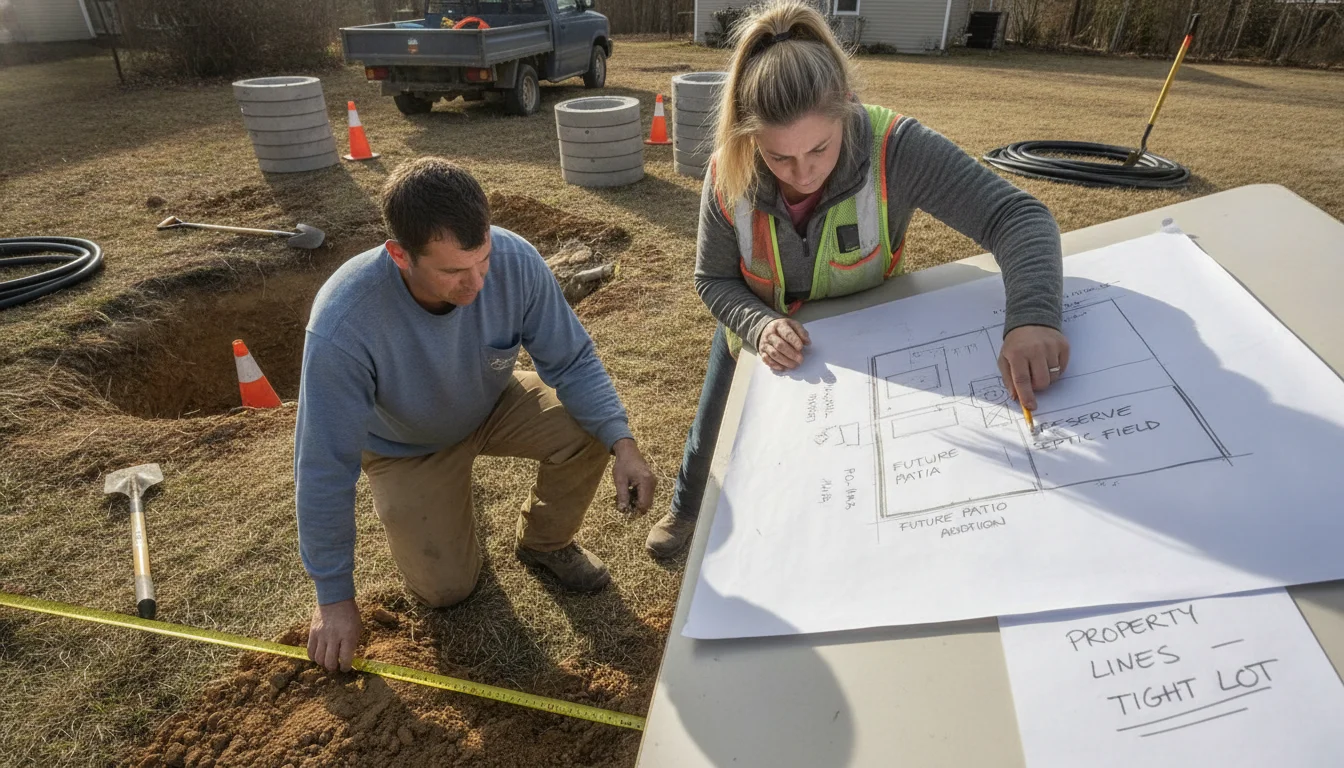
Elevation and future plans: Place the tank high enough to maintain slope from the house but not so high that the field starves for elevation and needs an oversized pump. On tight lots, designate a reserve area now to protect resale value. Sketch long‑term projects (patios, additions, pools, driveways) so your septic layout doesn’t block them—or end up buried beneath them.
How to Check Distances on Your Own Property
You can do quite a bit before calling a pro.
-
Start with records: “As‑builts” are the final plans on file after installation. They often show tank and drainfield locations with distances and benchmarks. Many county health departments host online maps or PDFs, or you can request copies at the counter. Ask for the current setback table, because local rules in Houston may differ from nearby towns, and waterfront or flood‑zone parcels may have stricter distances.
-
On‑site clues: A cleanout near the home often points toward the tank. The building drain usually exits the foundation at a gentle angle you can trace outside. Use a hand probe to feel for lids or chambers—after calling utility locate services to avoid gas, power, fiber, or water lines. Measure from fixed points (corners, steps, wells, property pins) and sketch your findings to scale. These notes help when you schedule a Septic Inspection or Septic System Repair with Septic Pumping Houston.
-
Avoid risky digging: Don’t use heavy equipment to search unless you’ve confirmed locations and requested utility locates and permits. A licensed provider can locate tanks with probes, cameras, or electronic tools and then mark lids and lines clearly. That small investment pays off during pumping, troubleshooting slow drains, or planning an addition.
Common Mistakes and How to Avoid Them
Small siting errors can lead to backups, odors, and soggy lawns.
- Blocking access: Concrete, pavers, or decks over lids make pumping messy and time‑consuming. New driveways can crush tanks or laterals.
- Planting the wrong trees: Water‑seeking species near the field send roots into perforations and fittings.
- Redirecting runoff: Regrading that channels stormwater over the field overloads the soil.
- Building too close: Additions or sheds can violate setbacks or trap pipes.
Before you build near a setback, bring in a licensed pro. If you see wet spots over the field or slow fixtures indoors, act quickly. Ask about permits, soil tests, groundwater checks, and how the design protects wells and nearby water—those answers should appear on the plan set. Confirm that pumping access will remain clear, where lids sit, how they’ll be marked, and how the yard will be restored. If you need a new system, Septic System Installation should include permit support and a final layout map for your records. If alarms sound or tanks fill fast, Cesspool Pumping and Service and Septic System Repair can keep things safe while you plan next steps.
Good habits protect your investment: add risers, keep a simple sketch with distances in your home files, and schedule Septic Tank Pumping based on household size and tank volume. Routine care keeps solids out of the drainfield, buys time for planning if issues arise, and supports resale value.
Real-World Scenarios, Timelines, and Costs
Lot conditions shape layouts—and timelines.
- Small lots: Tighter routing may require advanced treatment to meet setbacks.
- Steep slopes: Fields may shift downslope and need a pump for even dosing.
- Near lakes or streams: Codes often increase distances and may require raised beds, pressure dosing, or enhanced treatment to protect surface water.
- Sandy coastal soils: Setbacks may change to protect shallow groundwater.
- Reserve area: Many jurisdictions require a second, unused area for a future field.
Permitting adds time but prevents mistakes. Expect design review, possible soil tests, and at least one inspection before cover plus a final approval afterward. Budgets vary with soil work, access limits, pumps and alarms, or longer pipe runs. Complex sites need more materials and labor, so clear plans and tidy records help control cost. For existing systems, regular Septic Tank Pumping keeps the tank healthy and can help you avoid surprise repairs while you plan larger changes. For next steps in the Houston area, speak with your permitting office and your installer. The EPA’s general guidance on siting and maintenance is a helpful starting point (EPA homeowner resources).
Frequently Asked Questions
Homeowners often ask the same practical questions—especially during projects or when something in the yard looks unfamiliar. If a question touches a setback or involves digging, confirm local rules first and bring in a licensed provider for a clear, written plan. That keeps you compliant, protects utilities, and gives you documentation for future projects and resale.
- How do I find my septic tank on my property?
Start with county records or as‑builts. Look for a cleanout near the house and trace a gentle line outward. Probe with a hand rod to feel for lids. Don’t dig blindly and always check for utilities first. If unsure, schedule a Septic Inspection for safe locating.
- How often should a septic tank be pumped?
Most homes need pumping every few years, depending on household size and tank volume. If you notice slow drains, odors, or wet spots, book Septic Tank Pumping sooner and request a system check. Routine service protects the drainfield and supports longer system life.
- Is there a list of things I should never flush into a septic system?
Yes. Don’t flush wipes, diapers, hygiene items, grease, paint, solvents, or harsh chemicals, and limit garbage disposal use. Choose septic‑safe toilet paper. Smart habits prevent clogs and help the drainfield work as intended.
- How can I find out where the drainfield sits without digging it up?
Check as‑builts and permit drawings first. Walk the yard to spot long, level areas without trees or heavy structures, and lightly probe in a grid to feel for gravel or chambers. Never dig near utilities, and be cautious with probing if you haven’t requested locates. A Septic Inspection can confirm locations and mark them on a map.
- What happens if the tank is too close to the house?
If a past install sits too near, it can increase odor risk, water intrusion, and hard‑to‑reach lids—and may break code. A professional can assess options like rerouting pipes, adding risers, or planning a compliant replacement. Document the issue, speak with your permitting office, and get a plan in writing to avoid problems during resale or remodeling.
Key Takeaways
Everything about safe septic placement comes back to a few principles: protect water, maintain access, and plan for the long run. Setbacks aren’t arbitrary; they keep wastewater where it belongs and let pump trucks do their work. When you combine code requirements with site conditions like soil, slope, frost depth, and utilities, you get the real‑world answer to how far can a septic tank be from the house on your lot. Keep records, mark lids, and plan future projects so you never pour a patio or plant a tree over critical access points. Use this quick checklist:
- Know your local setbacks. The code in Houston sets the final distances.
- Place the tank for short, sloped piping and easy pumping access.
- Keep the drainfield in clean, dry soil away from wells and water.
- Find and save your as‑builts; measure and mark lids for future care.
- Call a pro before building near the system or when signs of trouble appear.
Conclusion
Placing a septic tank and drainfield is about distance, soil, and access—and the most reliable plan starts with local code and a careful look at your site. Short, well‑sloped runs to a serviceable tank simplify pumping, and a drainfield in oxygen‑rich soil protects your well, your neighbors, and the environment. Keep records, mark lids, and think ahead so you never build over critical components or block truck access. Septic Pumping Houston serves the main Houston area — from Houston Heights and Spring Branch West to nearby neighborhoods and communities — and helps homeowners plan code‑compliant layouts backed by clear documents for resale. For regular care, pumping, repairs, or new installs in Houston, count on clear guidance and clean work. Contact us to review your as‑builts, confirm setbacks, and design a system that fits both your property and your plans.
If you are not sure which of these you are dealing with, it is worth having someone look at it before it turns into a bigger job. Get in touch with Septic Pumping Houston today and we will tell you where you stand.